
Appeal Ruling Raises Serious Questions For NHA
Thursday, 19 Feb 2026
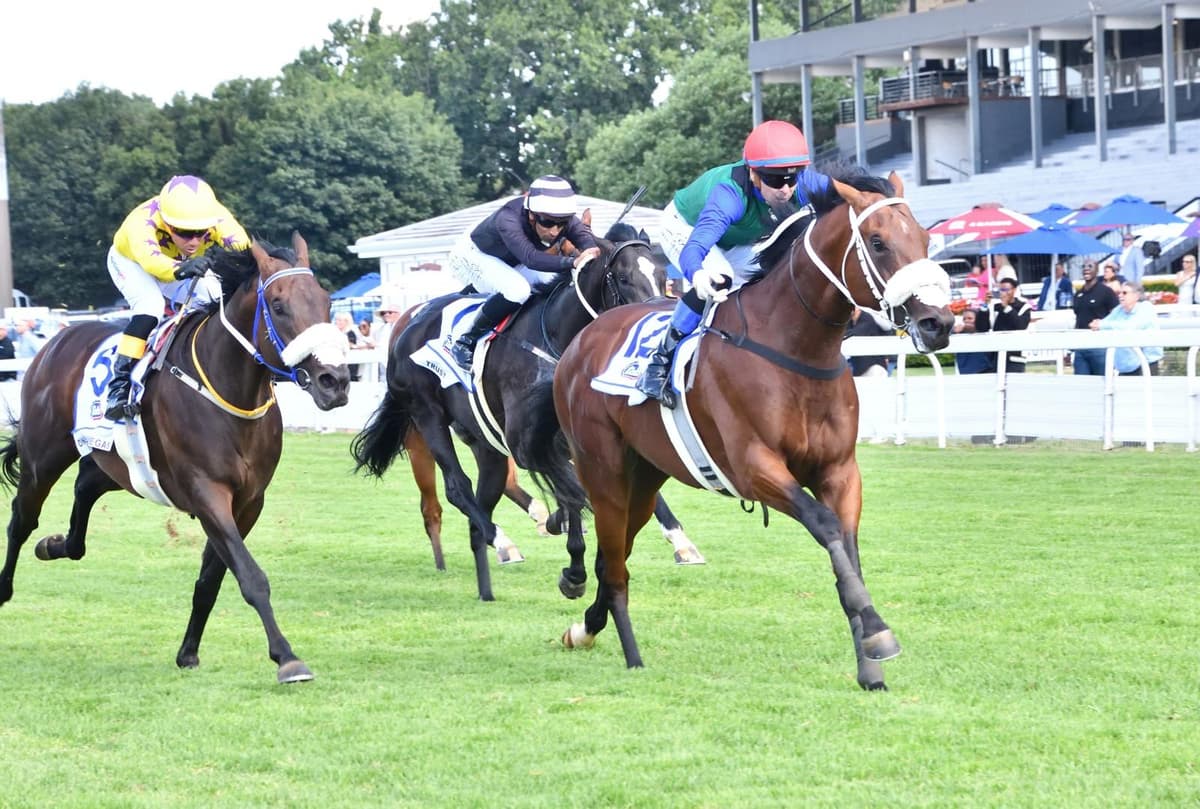
In what can only be described as a sharp rebuke of the original handicapping assessment, an independent Appeal Panel constituted under the rules of the National Horseracing Authority (NHA) has significantly reduced the merit ratings allocated following the 2026 Gauteng Guineas.
The Panel found that the line horse selected was not reliable under the circumstances, resulting in substantial downward revisions to the ratings of Splittheeights, Grand Empire, One Eye On Vegas and Yippee Kiyay.
Corrections of this scale are virtually unprecedented and inevitably cast doubt on the methodology applied in the initial assessment. The magnitude of the adjustment raises serious concerns regarding judgment and internal review within the handicapping department under the direction of Lennon Maharaj.
Handicapping carries enormous influence over the sport’s competitive balance and credibility. The NHA must now demonstrate that its structures provide sufficient internal review and accountability to prevent similar occurrences in future, and to ensure that merit ratings reflect performance, not perception.
Read below, the objection lodged by Mike and Mathew de Kock, and Sean Tarry, against the initial ratings allocated after the Guineas. Following that, you can read the NHA Handicapping Department’s response to the appeal and further notes by the De Kock team in support of their objection.
HERE IS THE ORIGINAL OBJECTION LODGED BY MIKE AND MATHEW DE KOCK, AND SEAN TARRY, AGAINST THE RATINGS ALLOCATED
To whom it may concern
We would like to jointly object against the rating increases of the following horses out of Saturday 7th February 2026 TAB Gauteng Guineas.
SPLITTHEEIGHTS – 97>121
Grand Empire – 108>120
One Eye On Vegas – 106>118
Yippee Kiyay – 101>117
We feel the selection of Tin Pan Alley as the line horse is unreasonable for the following reasons.
-The first and main reason given to Mathew de Kock when in discussion with the handicapper was that by choosing Tin Pan Alley it allowed most of the runners ahead of him to be raised a considerable amount. This is done to maintain a race rating in order to keep the “standard” of the race high. So Tin Pan Alley was not selected for his merits, but was selected to allow the handicapper an opportunity to raise horses ahead of him. We feel they have premeditated figures and are trying to play catch up on races where there were restrictions in place.
-Tin Pan Alley achieved his peak rating/s over 1400m and 1450m. In three attempts Tin Pan Alley has not achieved his current rating of 117 over 1600m. In the Premiers Champion Stakes he runs to a 113. In the Dingaans he was not striding out. In Saturdays Guineas, he is beaten at level weights by two horses who are well exposed outside of the feature race circuit in Grand Empire (108) and Yippee Kiyay (101). We therefore believe he ran to below a 117 over the 1600m again.
-Trust and Tin Pan Alley have met on two occasions. Therefore, If Tin Pan Alley was a true line horse he should have run in front of Trust in the Guineas based on their Graham Beck run. We can’t consider his Dingaans run as he was not striding out. In the Graham Beck he beats Trust 0,6 lengths giving him two kilograms. Once again backing up our motive that he did not run to his peak rating over a mile.
-We feel Grand Empire was a much more suitable line horse. He has been exposed to true handicaps on three occasion making him easier to assess and a more accurate guide. Two of those handicaps were over the same distance as the guineas validating his choice as a line horse. In our opinion It is unrealistic to believe that horses like Grand Empire and Yippee Kiyay can improve 12 and 16 pounds respectively when in their last runs, two and three weeks ago, they were both beaten in open company off the lower figures.
-Yippee Kiyay could also be a more suitable line horse based on the fact that he has been exposed in open company on a few occasions. The start prior to the guineas he was beaten into second in a middle stakes. A good honest effort off a 101 rating. One Eye On Vegas and Yippee Kiyay are great form references as they hold their form from the got the Got the Green light stakes and into the Guineas. Albeit a slightly smaller margin between them which can be put down to a reverse in barriers. With this we are showing Yippee Kiyay to be a very consistent horse and easily another potential line horse off the 101 mark achieved in the run in between the two features.
-One Eye On Vegas is another horse that proves Tin Pan Alley could not have run to his peak rating in the Guineas as he was beaten comfortably by him in the Graham Beck receiving 2kg. This was the only other time they have met. In the guineas Tin Pan Alley was a length behind One Eye On Vegas at level weights.
-To put it into perspective, Jan van Goyen is without a doubt the most credentialed three year old colt in the crop currently. His peak rating is 118. He is a dual group one winner. Now we have SPLITTHEEIGHTS (121), Grand Empire (120), Trust (119) and One Eye On Vegas (118) the same or higher than the leading three year old, JVG. This is absurd, irrational and misleading. There shouldn’t be a three year old colt rated higher than JVG at the present moment.
Added food for thought when assessing the three year old crop:
In the Dingaans, Jan van Goyen comes off a 5 month rest and runs below his rating. This is justified by the margin of defeat of the 3rd,4th and 5th horses. He runs 2 weeks later in Cape Town and runs to his rating. How is it possible that both his performances are rated equal? How is he the line horse in the Dingaans, coming off a 5 month rest straight into a mile. The Dingaans assessment was flawed and has had a knock-on effect.
Last year the same flawed analysis and thinking was applied to Parisian Walkway on his Guineas win. With the benefit of hindsight, Mr Alec Laird was proven right but was erroneously overruled.
It is our contention that the handicapper is erroneously assessing the race to suit his narrative that the “race should maintain a certain standard” and not assessing the ACTUAL result. It is inconceivable and without logic that one can rate each year’s crop of Guineas winners the same. Anyone with a basic knowledge of the horse will know that not all crops are equal. They should be judged on what they actually achieve not on what the handicapper WANTS them to achieve. In other words, MERIT rating.
Here we have multiple clear lines of form where horses have been exposed to ACTUAL correct current ratings of the older crop over this trip or similar trips. The handicappers have elected to ignore the obvious.
The pattern assessment is done at the end of the season by an international committee once the crop is fully exposed and all classics are run. These horses might legitimately achieve these ratings by then but will be based on ACTUAL results, not a desired result.
In closing: The line horse here is not the logical one.
Kind regards
Mat de Kock, Mike de Kock and Sean Tarry
END OF DOCUMENT ONE
HERE IS THE NHA'S RESPONSE TO THE RATINGS OBJECTION, WITH FURTHER NOTES FROM THE DE KOCK TEAM (in red):
National Horseracing Authority of Southern Africa: Handicapping Department
Date: 13 February 2026
To: The Appeal Panel
Subject: Response to Merit Rating Appeal – Grade 2 Gauteng Guineas
Dear Members of the Appeal Panel,
We acknowledge receipt of the appeal submitted by Mr. Mathew de Kock, Mr. Mike de Kock, and Mr. Sean Tarry regarding the merit rating adjustments following the Grade 2 Gauteng Guineas held on 7 February 2026. After careful review of the appellants’ arguments, we respectfully submit the following response.
1. Justification for Tin Pan Alley as Line Horse
Tin Pan Alley was selected as the line horse based on established handicapping principles. He demonstrated proven ability over 1600m when finishing second in a Grade 1 event as a two-year-old, and his most recent Pinnacle (1450m) performance against older horses confirmed his rating of 117.
The appellants’ claim that Tin Pan Alley has “failed” to run to his rating over the mile on three occasions is both selective and misleading. He had only two prior runs over the distance before the Guineas, one of which (the Dingaans) was compromised by a veterinary finding of “Not Striding Out.” This cannot reasonably be used to discredit his suitability. The handicappers are entitled to use his most recent revealed ability, which was at the 117 level, to rate the Guineas.
Our claim that Tin Pan Alley failed to run to his rating over the mile is not selective, it is factual. He ran to a 113 in the Premiers , a rating giving by you. He was not striding out in the Dingaans which we acknowledged. In the Guineas , Tin Pan Alley off a 117 was beaten at level weights by Yippee Kiyay (101), One Eye on Vegas (106) and Grand Empire (108). All well proven off their marks outside of the feature race circuit. He did not reproduce his Graham Beck run with Trust and One Eye On Vegas. In this race he was given every chance to see out the mile by riding him conservatively. Even then he failed to produce a strong finish. Therefore, one can reasonably assume that in the Guineas he has run below his best previous performances. All three places-getters that finishes behind Jan Van Goyen and Tin Pan Alley in the premiers have gone on to fail over a mile subsequently - Chronicle king, King herald and Count of Rouen.
The Handicappers rely heavily on TPA’s Pinnacle result. Second place getter in that race, Money Heist, ran three lengths off Grand Empire in the Wolf Power, prior to the Pinnacle with Tin Pan Alley. In the start after the Pinnacle he runs third in lower division, therefore suggesting the form is poor out of the Pinnacle stakes. Greaterix, who finished fourth in the pinnacle behind TPA, finished fifth two weeks later in another Pinnacle. Radicchio in his next start finished fourth in the same race. The 1450m pinnacle that TPA won is not a reliable form race.
If one compares it to the form of One Eye On Vegas for example, on the 16th December he beat Elegantrix at level weights. This is a better form line as Elegantrix goes on to win the Swallow stakes. In the same race he beat Aristotle who then went to win the Drum Star handicap. One Eye On vegas in his next two starts was beaten 1,3 lengths and 1,4 lengths at level weights by SPLITTHEEIGHTS, thus showing a consistency in his performances.
One Eye On Vegas on the 1st November finished 3,1 lengths behind TPA and in receipt of 2kg. So, our contention is that on a line of form through Trust, SPLITTHEEIGHTS and One Eye on Vegas, Tin Pan Alley is not a reliable line horse as he has run well below his 117 rating achieved in his penultimate start. We would suggest the reason he did not achieve that rating is that he does not see out a mile and therefore is an unreliable line horse. The handicapper is failing to recognise that he has run below par in the Guineas. Therefore, his analysis is flawed by choosing to ignore the obvious.
2. Assessment of Grand Empire as a line horse
The appellant’s proposal to use Grand Empire as the line horse is flawed. Grand Empire had shown progressive improvement leading into the Guineas, rising from 95 to 108, and his performance in the Guineas confirmed further progression by defeating Tin Pan Alley at level weights. Freezing his rating at the Wolf Power level would ignore natural improvement and distort the race assessment, artificially depressing Splittheeights’ rating.
We don’t see how this would depress Splitttheeights rating as he would rise from a 97 to whatever the handicapper asses him at, superior to Grand Empire. Grand Empire was not the only horse we suggested as a line horse. One Eye On Vegas and Yippee Kiyay have as much credentials as others.
Adopting Grand Empire as the line horse would reduce the race level to 109—an anomaly well below the historical standard of the Gauteng Guineas. The lowest winner in the past five years was Eye Of The Prophet at 113, while Lady Of Power at 109 remains the lowest-rated filly to win the Fillies Guineas in the previous five years.
The above paragraph confirms our contention that not all crops are equal.
Applying the appellant’s proposal would also rate Splittheeights considerably below Hazy Dazy (117), despite Splittheeights recording a significantly faster time on the same day. Race times are a critical measure of quality and cannot be disregarded. The Adjusted rating of Splittheeights therefore reflects both comparative performance and the integrity of the handicapping process.
To compare race times is “selective and misleading”. The Handicapper is attempting to muddy the waters by bringing the fillies Guineas into the equation. It’s amazing that now times become relevant where in the past he chooses to ignore times when assessing ratings. If times are now of relevance to this handicapper, we can accept the assessment of races in the future will improve. We now also reserve the right to appeal a penalty given in slow run races.
Whilst you have now brought up the fillies race to make an accurate comparison if Hazy Daisy ran with the colts, she would have carried 57,5kg. If she ran with 2,5kg less based on times and mathematics she would have beaten the colts. We feel she was the best performance of the day between the two races.
Another factor that is misleading is that race times depend a lot on early pace and as you saw in the colts Guineas, there was a runaway leader.
Lowveld Lily, rated 109, was appropriately used as the line horse to rate the Gauteng Fillies Guineas. While her wins are confined to modest Maiden and Class 5 company, her consistent competitiveness at higher levels—finishing 5th in the Cape Fillies Guineas and 4th in the Gauteng Fillies Guineas—makes her a credible and reliable benchmark.
Once again you bring up the fillies race, at least in the race you have chosen a line horse that performs well enough to run a place.
While in your attempt to muddy the waters with the Fillies Guineas, you use lowveld Lilly as the line horse. Let’s look at the Cape Guineas where she ran 5th at a sedate 100,61 seconds as opposed to Jan Van Goyen’s 98,45 seconds. If you are now using times to analyse races, your line horse in the JHB Fillies Guineas ran fifth in the Cape Guineas in a sedate 100,61 seconds. So, therefore, now using times to justify ratings your thinking is flawed. This is not what we are arguing about, you are muddying the waters by bringing the fillies into the equation.
However, her rating should not be equated with Splittheeights. Dropping the Gauteng Guineas to 109 would disregard Splittheeights’ superior race time and stronger record, thereby undervaluing the quality of the performance.
3. Irrelevance of Trust, Jan Van Goyen, and Other Comparisons
References to Trust, Jan Van Goyen, or the Dingaans assessment are irrelevant to the Guineas rating. Tin Pan Alley was the line horse, not Trust, and comparisons to other races do not alter the fact that the Guineas was rated independently.
We have to make comparison with Trust, as your line horse Tin Pan Alley has not run to previous form with Trust.
The assertion that no horse should surpass Jan Van Goyen’s rating is speculative and contrary to the principle of merit ratings, which reflect actual race performance rather than reputational ceilings. Merit ratings are based on demonstrated ability, not perceived limits.
We agree that ratings are based on demonstrated ability and not perceived limits. Hence the reason that the only group one winning colt of his generation should be the highest rated, because he demonstrated that,twice!
Your last paragraphs proves our assertion. You have not applied principle of handicapping in this Guineas as you have applied perceived handicap by using the wrong line horse to achieve your perceived ratings. You have not assed the actual result of the race as you thinking is clouded with the obsession of the pattern.
4. Graded Race Context and the Pattern
Graded or Pattern races are, by definition, about maintaining standards. They represent the highest level of competition in Thoroughbred racing.
The Gauteng Guineas, as a Grade 2 event, must therefore be rated in line with its status, prize money, and the calibre of horses it attracts. Middle stakes or benchmark handicaps are not equivalent in class or purpose. Horses (especially three-year-olds) stepping up from those races into Grade 2 company are expected to show significant improvement, and the ratings must reflect that reality.
This is a flawed argument and you are contradicting yourself about handicapping principles and merit rating. This is a massive generalisation that all horse stepping into a Grade two must improve. This paragraph is more evidence that you are rating the race on your desired standard, not the actual result.
Is it conceivable that Yippee Kiyay Improved 16 pounds in two weeks. If he ran of this 117 rating in his previous middle stakes, where would he have finished?
Is it conceivable that Grand Empire improved 12 pounds in 27 days. If he runs in the Wolf Power off 120, where does he finish?
If One Eye On Vegas runs off a 118 in open company, how will he go?
A realistic improvement of 4-5 pounds on these above mentioned horses would have been in our opinion acceptable.
However, the historic ratings underscore that handicappers do not simply apply the same level each year; while historical standards are taken into account, the rating is ultimately determined by the chosen line horse, as is the case with all handicapped races.
This is a set weights race not a handicap. We expect you as the handicapper to have a broad enough way of thinking that when there is no clear line horse, that you have the capability of assessing the race for what it is and not for what you would like it to be.
If we are talking about history, we would like you to acknowledge the same circumstances played out with last year’s guineas winner Parisian Walkway. You have not made mention of that and how Mr Alec Laird’s objection is looking now? Green with Envy is another great example of your incorrect application. Yet with hindsight, how are these objections looking now?
To disregard the standards inherent in Graded races would undermine the very purpose of the Pattern system, which is to identify elite performances and ensure that races of this stature retain their credibility.
Conclusion
The appeal relies on selective interpretation of Tin Pan Alley’s record and speculative assertions about other horses’ ratings. The handicappers’ decision to use Tin Pan Alley as the line horse is justified by his proven consistency, his Pinnacle performance, and his suitability for the Guineas context. Grand Empire, while improving, is not an appropriate line horses as his progression was ongoing and unexposed at the time.
Grand Empire was not the only horse we suggested you could have used as line horse however you have proved categorically that you erred in choosing a horse that ran unplaced in TPA, which clearly illustrates he ran below par, to suite your narrative .
The ratings awarded to Splittheeights, Grand Empire, One Eye On Vegas, and Yippee Kiyay accurately reflect their performances in this Grade 2 event relative to the line horse Tin Pan Alley.
The appeal does not demonstrate any error in the handicappers’ methodology and should therefore be dismissed.
Respectfully Submitted,
The Handicapping Panel
Your own statements have proved error in your methodology. We refer to our letter that pattern racing is assessed at the end of the season. These horses will be running against the likes of Jan van Goyen in time to come and may achieve the ratings you desire, but the facts are they haven’t achieved them yet.
While we understand the difficulty in picking a line horse here, we feel the handicapper should rate the race based on its merits. Not based on the inflated ratings he would like to achieve by using a horse that is not the obvious choice.
Tin Pan Alley may have achieved a rating of 117 previously, but he did not achieve it in the Guineas.
END OF DOCUMENT TWO